Picture this: you’re out on the water at sunrise, rod in hand, surrounded by the wild and untamed landscapes of Australia’s Top End. Sounds pretty incredible, right? A Darwin fishing trip delivers exactly that kind of experience, and the good news is you don’t need to be an expert angler to enjoy it.
Darwin and the Northern Territory are recognised as some of Australia’s best fishing destinations, and it’s easy to see why. From the billabongs of Kakadu National Park to the remote waters of East Arnhem Land, the region is packed with world-class spots and an impressive variety of fish to target. Whether you’re a complete beginner or just looking to explore something new, there’s a trip style and charter option out there for you.
In this guide, we’ll walk you through everything you need to know before you book. We’ll cover the best fishing locations, what species you can target, the ideal time of year to visit, what licences you might need, and how to choose the right accommodation setup for your adventure. Let’s dive in.
Why Darwin Is One of Australia’s Premier Fishing Destinations
If you’re researching a Darwin fishing trip, you’ve landed on one of Australia’s genuinely exceptional fishing destinations, not just a popular one.
The Top End’s combination of tidal systems, floodplain wetlands, and river networks creates habitat that supports an impressive range of species. Barramundi are the headline act, but mangrove jack, golden snapper, threadfin salmon, and offshore pelagics are all within reach depending on where and when you fish. For a full breakdown of what species, seasons, and locations to expect when fishing Darwin NT, that guide covers it in detail.
Darwin’s location is a genuine advantage. Iconic spots like Corroboree Billabong, Shady Camp, the Daly River, Kakadu National Park, and Arnhem Land are all accessible within a half-day’s travel. That means even a short trip can put you on world-class water without burning days in transit.
The NT’s fishing industry is well-established and officially recognised. Tourism NT and regional authorities actively promote fishing as a destination pillar, and a licensed charter and guide industry supports everything from casual tourist day trips through to serious multi-day expeditions.
What sets the Top End apart from southern fisheries is the combination of remote wilderness, healthy fish populations, and professional guiding infrastructure. Less fishing pressure, more fish, and guides who know the water intimately. That’s a hard combination to beat anywhere else in the country.
The Main Types of Darwin Fishing Trips Explained
So you’ve decided Darwin is the place to fish. Now the real question: what kind of trip suits you best?
There are four main formats, and they suit very different types of anglers.
1. Day charter trips are the easiest entry point. You’re out on the water for a single day, targeting inshore species around Darwin Harbour, Bynoe Harbour, or Dundee Beach, then back in time for dinner. No packing for multiple nights, no big commitment. Perfect for tourists or first-timers wanting to experience Top End fishing without the complexity.
2. Lodge-based trips give you a comfortable onshore base with meals included and guided fishing each day. You fish hard, then return to dry land each evening. Great for anglers who want structure, or groups where not everyone is equally keen to rough it.
3. Mothership live-aboard trips are a different beast entirely. The vessel repositions overnight, putting you into remote fisheries that day charters simply cannot access. If you’re serious about chasing untouched water and maximising time on the rod, this is your format.
4. Remote destination trips take you into places like Arnhem Land, Kakadu’s wetlands, and the Daly River, where fishing pressure is minimal and fish populations reflect it.
For a full breakdown of locations and charter styles, the Fishing Charters in the Northern Territory: Darwin, Dundee Beach and Beyond guide covers everything in detail. Fishthetopend.com offers all four formats, from single-day Darwin experiences to extended remote expeditions.
Top Fishing Locations Around Darwin and the Northern Territory
Each trip type has its own ideal home water, so here’s a quick rundown of where you’ll actually be fishing across the Top End.
- Corroboree Billabong sits within the Mary River wetlands and is one of the most photographed barramundi fisheries in the country. Saltwater crocodiles, jabiru, and magpie geese share the water with you, making it as much a wildlife experience as a fishing one.
- Shady Camp is a name that gets serious anglers excited. The tidal barrages concentrate barramundi in extraordinary numbers during the dry season, and big barra are a genuine expectation rather than a lucky bonus. If you want your best shot at a metre-plus fish, this is the place.
- Dundee Beach and Bynoe Harbour are located southwest of Darwin and are among the most accessible Top End fisheries. Estuary and inshore fishing here regularly produces barramundi, threadfin salmon, and mangrove jack without requiring a multi-day expedition.
- The Daly River is iconic freshwater barra territory. Multi-day trips here take you into a remote tropical setting where the fishing pressure is low and the fish are fat. If you want to go deeper into the Top End experience, the Daly delivers. Read more in our Barra Fishing Darwin: 8 Things Every Angler Needs to Know guide.
- Arnhem Land requires an Aboriginal land fishing permit, and that restricted access is exactly why the fishing is so good. Fish populations are abundant and the experience feels genuinely untouched.
- Kakadu National Park combines world-heritage wilderness with productive river systems and floodplains that fish well across both the wet and dry seasons.
What Fish Can You Target on a Darwin Fishing Trip
Those great locations all hold one thing in common: exceptional fish. Here’s a quick rundown of what you can actually expect to pull out of Top End waters.
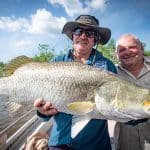
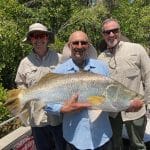
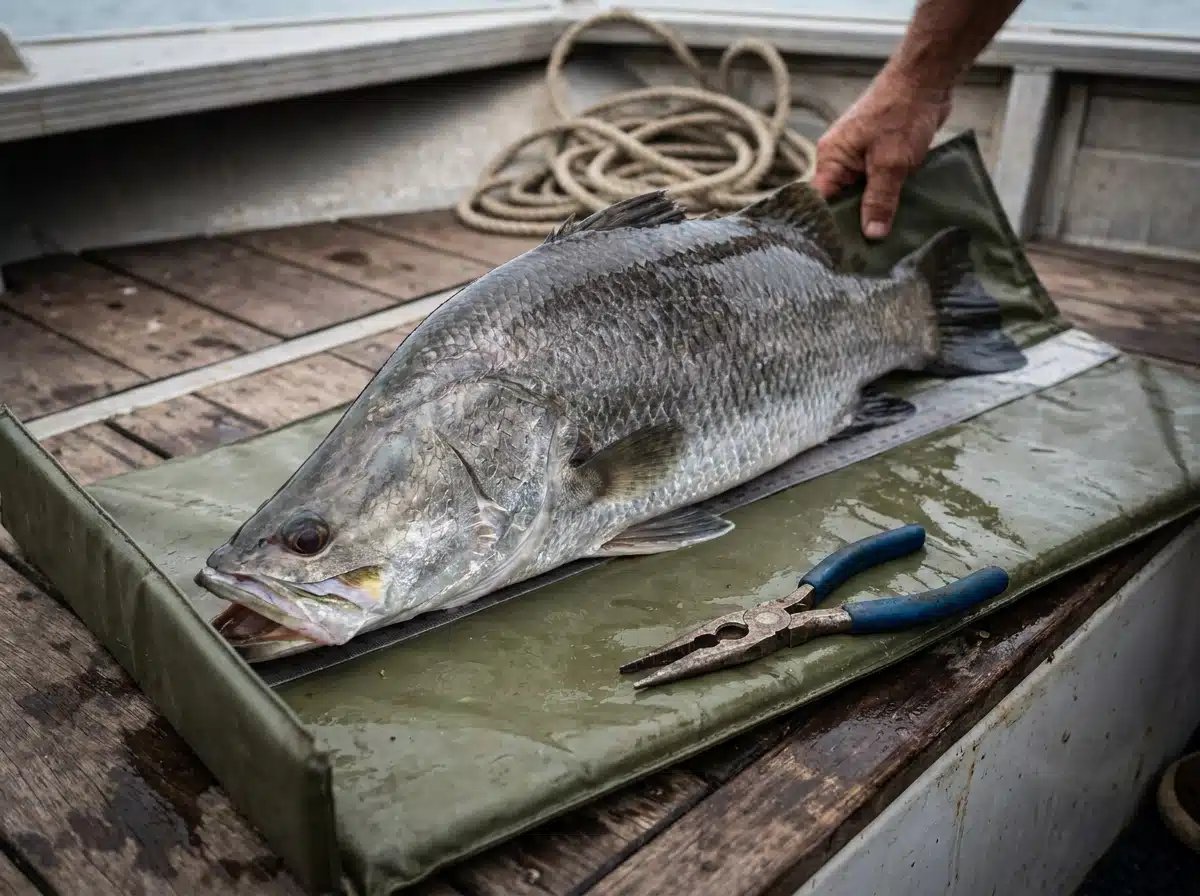
Barramundi is the reason most people book a Darwin fishing trip in the first place. Barra regularly exceed a metre in length, hit lures with explosive aggression, and make powerful runs that will test your gear. They also eat beautifully, so a feed of fresh barramundi at the end of the day is a genuine highlight.
Mangrove jack are smaller but punch well above their weight. Found throughout Darwin’s estuaries and creek systems, they’re ambush predators that sit tight to structure and hit hard. Technical, satisfying fishing.
Golden snapper (fingermark) are a prized reef and estuary species that can grow beyond 90cm and fight strongly on the way up. Note that possession is limited to 3 fish, so they’re a catch-to-keep trophy rather than a numbers game.
Threadfin salmon are a serious sport fish, with specimens over a metre common in tidal rivers and on beaches. Dundee Beach and the broader coastal zone are particularly productive.
Offshore bluewater trips open up a completely different menu: Spanish mackerel, giant trevally, tuna, coral trout, and even sailfish. It’s a different style of fishing altogether from the inshore and estuary work.
Mud crabs round out the experience on many inshore trips. They’re not a sport catch, but they’re arguably the best thing you’ll eat all week.
For more detail on where each of these species is most reliably found, the Best Fishing Spots Near Darwin guide breaks it down location by location.
Best Time of Year for a Darwin Fishing Trip
Knowing when to go is just as important as knowing what you’re chasing.
The Northern Territory recognises four distinct fishing seasons, and each one fishes differently.
Dry season (May to October) is the most popular window. Stable weather and falling water levels push fish into concentrated, predictable locations. Remote destinations like Shady Camp, the Daly River, and Arnhem Land become accessible by road. For first-timers, this is the safest bet.
Late dry season (August to October) is the sweet spot for Shady Camp and tidal barrage fishing. As water drops further, barramundi stack up at feeding positions in dense numbers, making this period consistently productive for anglers of all skill levels.
The build-up and early wet (October to January) brings heat and humidity, but also exceptional barra fishing. Fish move aggressively ahead of the rains, and the “first flush” phenomenon, when billabongs overflow and release baitfish into connected waterways, can trigger absolutely mind-blowing barramundi sessions. These windows are short, sometimes just hours, so local knowledge matters.
Wet season (December to March) cuts off many remote roads, but mothership and boat-based trips continue fishing accessible river and coastal systems.
If you’re searching for the right Darwin fishing experience, offshore pelagics, freshwater barra, and inshore estuaries all peak at different times. Build your travel dates around your target species, not the calendar.
Permits, Park Passes, and Regulations You Need to Know
Once you’ve locked in your timing, it’s worth getting across the paperwork side of things before you book.
Arnhem Land Aboriginal Land Permit
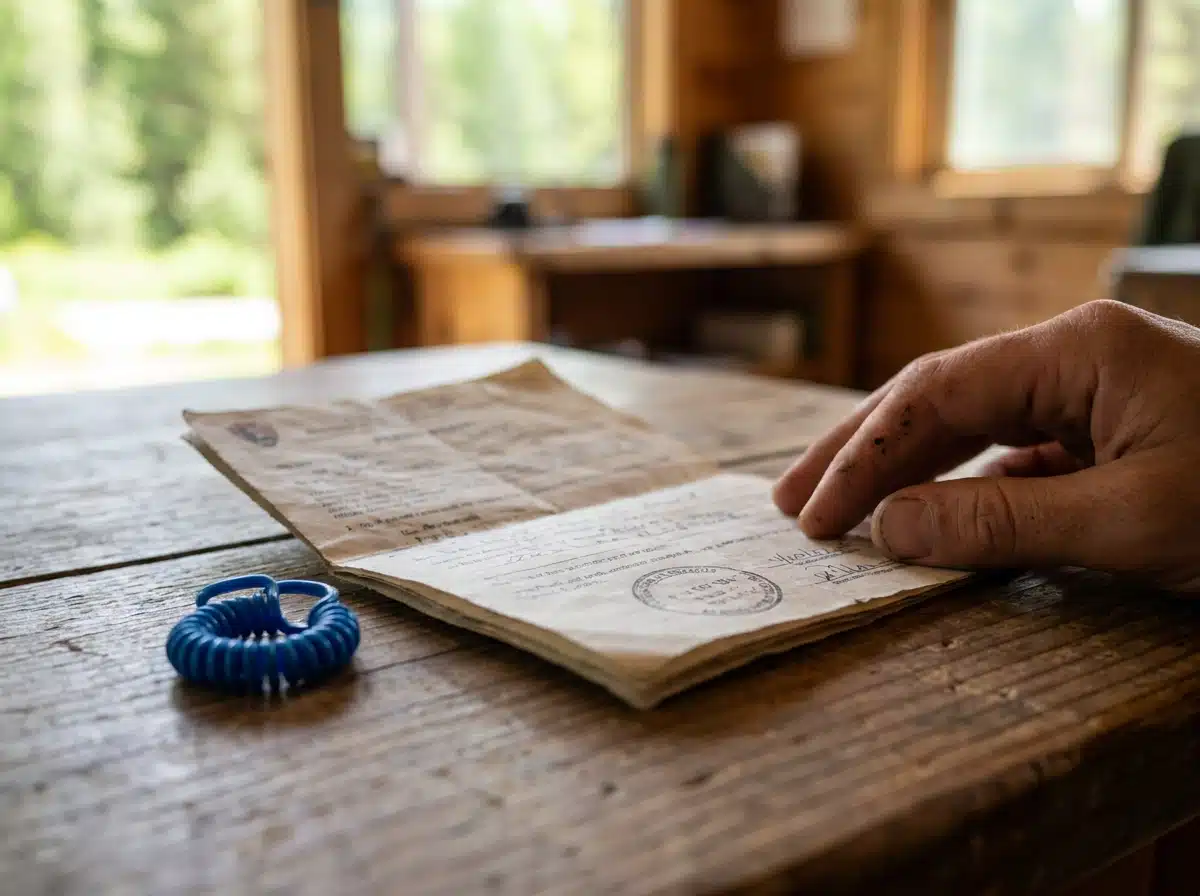
Fishing in Arnhem Land requires an Aboriginal Land Permit, arranged before you travel. This isn’t something you sort out at the gate. Reputable operators handle permit logistics on behalf of their guests, so if your charter includes Arnhem Land, confirm that permit coordination is part of the service.
Kakadu National Park Pass
Entering Kakadu for any reason, including fishing, requires a valid park pass. Fees apply to all visitors. Factor this into your trip budget when comparing package costs.
NT Fishing Regulations
Northern Territory fishing rules cover bag limits, size limits, and seasonal closures. These apply to every angler on the water, including those on guided charters. Ignorance isn’t a defence, so it pays to know the basics. You’ll find helpful guides and trip information on the Fish the Top End blog that can help you prepare.
Barramundi Size Rules
Barramundi must be at least 55cm to keep. Any barra over 120cm must be released; these are large breeding females and the rules exist to protect the fishery for future seasons.
Check Your Operator’s Credentials
Charter operators must hold commercial fishing licences and current boat safety certifications. Always verify this before booking. A legitimate operator will have no hesitation providing that information.
Lodge Stay or Live-Aboard Mothership: Which Is Right for You
Once you’ve sorted permits and regulations, the next decision is arguably the most personal one: how do you actually want to spend your time between fishing sessions?
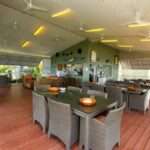
Lodge-based trips give you a comfortable onshore base with proper sleeping quarters, communal dining, and a structured daily program. You fish hard during the day, then return to dry land each evening. It’s a great fit if you like routine, value a good night’s sleep in a proper bed, or are travelling with a partner who wants time to explore local attractions while you’re on the water.
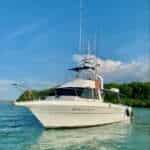
Mothership live-aboard trips work differently. The vessel repositions overnight, getting you to remote fisheries that are simply out of reach on a day trip. You wake up already on the water, in locations with far less fishing pressure. That combination of extra fishing hours and less-pressured water generally translates to stronger results, making live-aboard the go-to choice for anglers who want to maximise their time chasing fish.
For mixed groups where not everyone is fishing-obsessed, a lodge trip is usually the stronger choice. For dedicated anglers chasing the most remote Top End water possible, the Small Group Northern Territory Mothership Fishing Charters option is hard to beat.
Fishthetopend.com runs both formats. The right pick comes down to your target species, your group, and how far off the beaten track you want to go.
What to Expect on a Guided Darwin Fishing Charter
Once you’ve chosen your trip format, it helps to know what actually happens on the water.
Gear is provided. Your guide supplies rods, reels, lures, and bait. Pack sunscreen, a hat, sunglasses, a light long-sleeve shirt, and closed-toe shoes, and you’re set. Most operators also recommend a light rain jacket for early mornings.
Inshore day charters run on a predictable schedule. Expect an early start, usually before sunrise, to catch the most productive tidal windows. You’ll travel by boat to the fishing grounds, receive hands-on instruction from your guide throughout the day, and be back at the dock by early to mid-afternoon.
Multi-day and remote trips are more fluid. Guides read tides, weather, and fish behaviour in real time and move locations accordingly. The itinerary bends to match the conditions, which is exactly what delivers results in remote Top End fisheries.
Meals are part of the package on lodge and live-aboard trips. Expect solid, no-fuss catering, and a good chance your catch ends up on the dinner plate that same evening.
Never fished before? No problem. Darwin charters actively welcome beginners. Guides are skilled at coaching newcomers through casting, setting the hook, and landing fish safely. If you want more detail before you book, the Barra Fishing Charters Darwin guide covers everything you need to know before your first trip.
Plan Your Darwin Fishing Trip with Confidence
Now that you know what to expect on the water, the final step is pulling it all together.
Start with your trip format. Choosing between a day charter, lodge stay, or live-aboard mothership shapes everything else: which locations you can reach, which species you’ll target, and what budget you’re working with. Lock that in first.
Timing matters. The dry season (May to October) gives you the most reliable conditions, the best remote access, and the most predictable barramundi fishing. If your dates are flexible, this is the window to aim for.
Verify your operator. A good charter operator handles permits, park passes, and Aboriginal land access on your behalf. But it’s worth confirming they hold the right licences and have genuine experience with your target locations, especially for remote areas like Arnhem Land or the Daly River.
Fishthetopend.com covers the full range of Top End experiences, from Darwin-based day trips through to extended remote expeditions by lodge or live-aboard mothership. Browse the trip options or get in touch to put together an itinerary that suits your goals, your group, and your target species.
The Top End is genuinely unlike anywhere else in Australia. World-class fish, remote wilderness, and professional guides who know every tidal creek and river bend. A Darwin fishing trip belongs on your bucket list, and this is the best place to start planning it.
Conclusion
Darwin delivers a fishing experience that few destinations in the world can match. You now have everything you need to plan with confidence: the best seasons, the right trip format, the key species to target, and the regulations to stay on the right side of.
The most important decisions come down to timing and format. Book during the dry season if you can, and choose the trip style, whether day charter, lodge, or live-aboard, that fits your goals and budget.
A quality operator makes all the difference. The right guide handles the logistics, knows the water, and puts you on fish.
Browse the trips at Fishthetopend.com, reach out with your dates and target species, and start building your itinerary today. The barramundi are out there. All that is left is booking your trip.