
Planning a Darwin holiday can feel like a giant game of Tetris. Kakadu, the croc parks, the harbour, and the city sights are already fighting for space on your calendar. So where does a fishing charter fit? The honest answer: usually in the gaps, not over the top of a landmark day.
In this guide, we will show you how to slot harbour, reef, and multi-day fishing trips around your itinerary instead of against it. We will cover why fishing rarely gets a whole day in Darwin, how to start with your itinerary and know the attractions first, and when a half-day harbour charter is the easiest fit. We will also look at full-day, Dundee and remote trips, Kakadu day tours, crocodile tours, NT fishing seasons, and the permits and rules to check before you book. By the end, you will know how to fish the gaps, not the landmarks, and still tick off the best things to do in Darwin.
Why a Fishing Charter Rarely Gets a Whole Day in Darwin
Darwin hands you a shortlist fast: Kakadu, the crocodile parks, the harbour itself. A fishing charter is one more contender for the same few holiday days.
Here’s our honest take. A half-day Darwin Harbour charter sits comfortably alongside a Kakadu day tour and a crocodile park visit. A full day, a Dundee Beach run or a remote Top End trip is a deliberate trade against a landmark day.
You’re probably working through things to do in Darwin and day trips from Darwin lists rather than hunting for a specific operator, so treat this as itinerary help, not a pitch.
The barrier is low: no recreational fishing licence is needed in the Northern Territory, unlike several Australian states, so a first charter is easy to add.
From here: assess your itinerary, match charter length to your days, then check seasons, permits and booking timing. One flag before we start. Kakadu rules get reviewed regularly, so re-check those close to travel.
Start With Your Darwin Itinerary, Not the Charter
Once you know fishing isn’t getting a full day by default, map your actual time before you look at charters.
- Count only usable days on the ground in Darwin. Subtract arrival day, departure day and any long road transfers, because those rarely leave room for activities.
- Write down the non-negotiables first: Kakadu, a crocodile park or crocodile tour, and some city and waterfront time.
- Apply a rule of thumb: about one full-day trip for every two days based in Darwin. A four-day stay supports roughly two big outings.
- Find the day with the least competing draw. It’s often between two heavy travel days, or the deliberately light day before departure.
- Check when your other day tours from Darwin depart. Early starts make those mornings unavailable, so the afternoon becomes the realistic charter slot.
- Cross-check your dates against the NT fishing seasons so you’re not planning a bluewater day in the wrong month.
- Write it all into a day-by-day table with morning, afternoon and evening columns. Gaps become obvious at a glance.
If barramundi is the draw, Barramundi Fishing Charters Darwin: 10 Things Every Angler Needs to Know Before Booking covers what to check before booking.
Know Your Darwin Attractions Before You Slot Fishing In
With your day-by-day table in front of you, list what else is competing for those gaps. City attractions fill half days neatly: the Darwin Waterfront, sunset markets, the Museum and Art Gallery of the Northern Territory, the World War II oil storage tunnels and the wharf precinct. You can see more ideas in this things to do in Darwin guide.
Crocodile parks in the city and nearby rural areas are their own category. Crocodile tours in Darwin are a headline draw, and most run half a day or less. Day trips from Darwin work the same way: Kakadu to the east, Litchfield and the Adelaide River region to the south, and wildlife parks closer to town. Most are sold as half-day or full-day products, which is exactly the time currency a charter spends.
The dry season concentrates demand across all of these at once, so those busy months are when competing bookings collide. Confirm current times directly with each attraction.
Half-Day Harbour Charters: The Easiest Fit
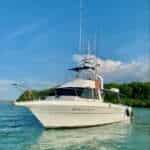
If you have one spare half day, the harbour is the smartest pick. Local harbour charters sit roughly five minutes from your hotel, so there’s no long road transfer and no travel day swallowed up.
Because the fishing happens inside Darwin Harbour, the rest of your day stays intact. You can still make a sunset market, a waterfront dinner or a city attraction.
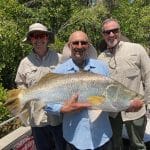
And it isn’t just convenient. In the Wet season, barramundi usually turn up in mangrove creeks and estuaries like Darwin Harbour, so the fishing is genuinely productive.
A Darwin Harbour fishing charter also suits first-timers, families and anyone who has never held a rod. The format is short, close to town, and easy to write off if the weather turns.
Slot it into a morning or an afternoon, not between two other bookings, and confirm the return time before committing to anything later.
Compare it honestly with a full day: the half day costs you nothing else on your list.
When a Full Day, Dundee or Remote Trip Is Worth Trading a Landmark Day
Past the half-day, the maths changes. A full-day charter, a Dundee Beach run or a remote river outing eats a day that could have gone to Kakadu or a crocodile park, so make that trade on purpose, not by accident.
Remote Northern Territory options spread wide: Corroboree Billabong, Shady Camp, the Daly River, Arnhem Land, Dundee Beach and Bynoe Harbour, with Kakadu in the mix for sightseeing. Keen anglers can base themselves at a fishing lodge or on a mothership live-aboard, formats built for longer holidays rather than a four-day city break.
Timing matters. The Dry season from May to September is peak bluewater season, when Spanish mackerel follow bait schools, and that’s when a longer run earns its keep. Budget a day either side for travel and recovery too, so remote trips rarely squeeze into a packed schedule.
Decide this before you book land-based tours. Once a Kakadu day tour is paid for, your flexible day is gone.
New to charters? Our Barra fishing charters Darwin guide covers the basics before you book.
Kakadu Day Trips and Fishing: What Actually Works
If Kakadu is the landmark you’re trading, here’s what actually works. It’s World Heritage listed, and Kakadu day trips from Darwin are long, so plenty of visitors make it an overnight rather than a same-day return. Fishing in the park is tightly regulated under the Environment Protection and Biodiversity Conservation Regulations 2000 and the Northern Territory Fisheries and Marine Acts. Commercial fishing isn’t permitted, and tour operators must hold a licence plus a current Kakadu permit. Source wording on that is inconsistent, so confirm details with park headquarters on (08) 8938 1120.
The rules that shape any plan: no cleaning fish within 50 metres of a water body unless at a designated facility, or on the water within one kilometre of land, and live bait is banned. The West Alligator River and waterways upstream of the Kakadu Highway are closed to fishing and boating.
Practical split: keep Kakadu as a sightseeing day, then take your fishing charter back in Darwin or with a Top End operator licensed for the area you intend to fish. Fishing Charters Across Darwin, Dundee Beach & Remote Northern Territory Locations can help you plan that way. Kakadu laws are regularly reviewed, so re-check rules close to your travel date.
Where Crocodile Tours in Darwin Fit Around a Charter
Crocodile tours in Darwin are usually half-day products, so they partner neatly with a half-day harbour charter across two separate days. Many jumping crocodile cruises run on the Adelaide River, which sits on the route to and from Kakadu, so you can fold one into a day trip from Darwin rather than spending a whole day on it. If you want both in one day, a morning croc tour plus an afternoon harbour charter can work, but confirm return and departure times with both operators first. When wind cancels a charter, a crocodile park is the sensible fallback because it is land-based and not affected by sea conditions. Don’t rely on quoted hours or prices; check current times with the operator. Remember both put you on the water, so decide which is the priority, and read Barra Fishing in Darwin: Everything You Need to Know Before You Book before you lock it in. Once you’ve picked your priority, the NT season decides whether a harbour half day or a longer run makes sense.
Time Your Charter With the NT Fishing Seasons
Once the croc tours are sorted, match your dates to the season. The NT fishing calendar runs four windows: Build-Up (October to December), Wet Season (January to mid-March), Run-Off (March to April) and Dry Season (May to September).
The Dry is peak bluewater season, when Spanish mackerel follow bait schools, so reef and bluewater trips fish best. That’s the month for a longer run.
In the Wet, barramundi sit in mangrove creeks and estuaries such as Darwin Harbour, the strongest case for a half-day harbour charter.
The Run-Off (March to April) is the river-mouth barramundi window, and it pairs naturally with a Corroboree Billabong or river-based outing.
Different months favour different species, so your travel season should decide between a harbour half day and a longer run. If a remote stay appeals, this guide to Barra Lodge NT: Where to Stay and Fish the Top End unpacks lodges, mothership live-aboards and camps.
One caveat: Kakadu access changes with the wet, so run a road-access check close to your date.
Rules, Permits and Closed Waters to Check Before You Book
Season sorted. Now the rules, and there’s good news first: no recreational fishing licence is needed anywhere in the Northern Territory, but rules and restricted zones still apply. Fishing on Aboriginal land requires a permit, and tidal waters overlying it may need one too, so ask your operator whose country you’re on and let them sort it.
In Kakadu, the possession limit is 15 fish per person, with sub-limits of 3 barramundi (minimum 55 cm overall, or a 27 cm fillet), 2 black jewfish, 2 Spanish mackerel, 3 golden snapper, 3 threadfin salmon, 3 mangrove jack (minimum 35 cm) and 3 sharks, excluding protected species. Sawfish plus northern river and speartooth sharks must be released.
Three handling rules catch visitors out: don’t clean fish within 50 metres of water unless it’s a designated facility, don’t clean them on the water within 1 kilometre of land, and don’t use live bait.
Kakadu’s laws are regularly reviewed, so confirm current rules with park headquarters on (08) 8938 1120 before you travel. Get this right and the booking side gets much simpler.
The Booking Rule: Schedule the Charter Around the Itinerary
The rule is simple: schedule the charter around the itinerary, not the other way round. Your holiday plan is the fixed asset; the charter is the flexible one.
Book it early in the trip rather than on the second-to-last day, so a windy morning leaves you spare days to rebook. Keep at least one buffer day before you fly out, and don’t anchor everything to a single date.
Before paying, ask the operator four things: return time, meeting point, what’s included, and whether transfers are provided. Confirm they hold the right licences and permits for the area being fished, especially Kakadu, Aboriginal land or remote river systems.
Then check for timing clashes. An early charter the morning after a late waterfront evening is a rough pairing, and a trip that returns after your booked sunset activity departs means you miss one.
For a short stay, the safest first booking is a half-day harbour charter. It slots in without deleting anything else from the list.
The Takeaway: Fish the Gaps, Not the Landmarks
Short answer: a half-day Darwin Harbour charter slots in alongside Kakadu day tours, crocodile tours and city attractions without costing you a landmark day. A full day, a Dundee Beach run or a remote Top End trip is worth it too, but only when you decide in advance which landmark day it replaces.
Your action list:
- Count your actual Darwin days.
- Write down your non-negotiables.
- Check the season window for your dates.
- Book the charter into the gaps.
Before you travel, confirm Kakadu rules and possession limits with park headquarters on (08) 8938 1120, since they’re reviewed regularly.
Then it’s simple: build the itinerary first, schedule the charter into it, and keep a buffer day for weather.
Conclusion
The takeaway is simple: fish the gaps, not the landmarks. Build your Darwin itinerary first, decide what you will not miss, then slot the charter around it. A half-day Darwin Harbour charter is the easiest fit for most short stays. A full day, Dundee Beach run or remote Top End trip is worth considering, but only if you knowingly trade a landmark day. Check the NT fishing seasons, Kakadu rules and possession limits before booking, and keep a buffer day for weather. Your next step: count your actual Darwin days, lock in non-negotiables, then book a half-day harbour charter into the gaps. Confirm current Kakadu rules with park headquarters on (08) 8938 1120. That way you get the fishing without missing the holiday.